
Infrared Thermography
Infrared Thermography – Phoenix, AZ
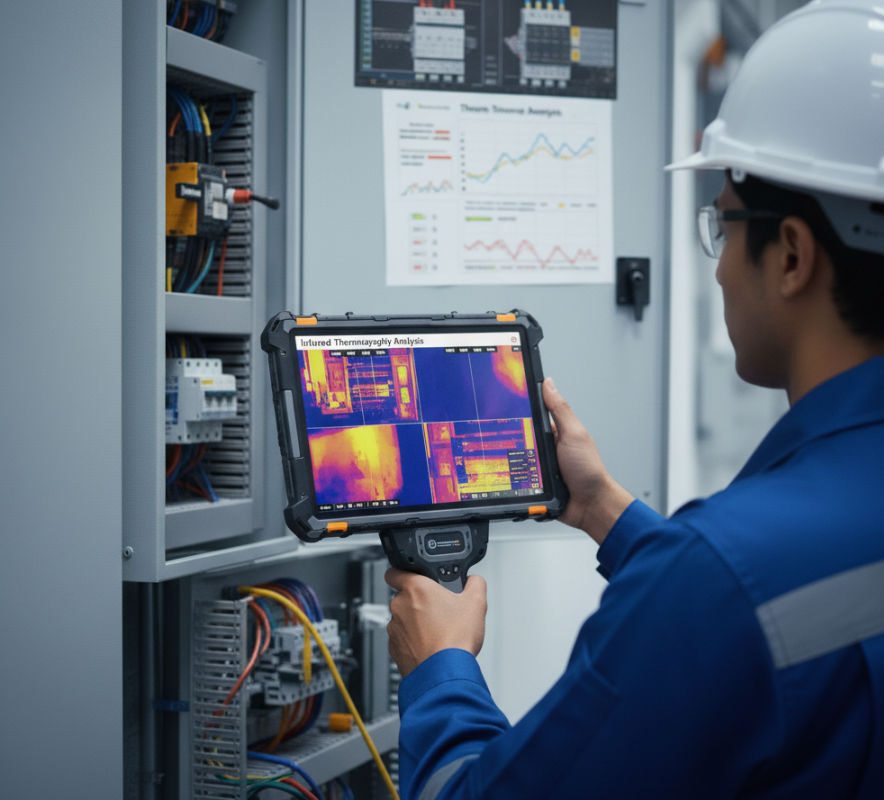
Infrared thermography uses thermal imaging cameras to detect heat patterns in electrical systems throughout Phoenix commercial and industrial facilities, revealing overheating components, loose connections, and failing equipment before they cause fires, failures, or downtime. Phoenix Contracting Services provides comprehensive infrared thermography inspections using professional-grade thermal imaging equipment that visualizes temperature differentials invisible to the naked eye—capturing thermal images of electrical panels, switchgear, bus bars, connections, and distribution equipment to identify problems months before visual symptoms appear.
All electrical equipment generates heat during normal operation, but excessive heat indicates problems like loose connections creating high resistance, overloaded circuits operating beyond capacity, deteriorating components losing contact integrity, or poor workmanship from improper installations. A connection running 40°F hotter than adjacent equipment signals impending failure—it looks perfectly normal visually, but shows as a bright hot spot in thermal imaging. Our infrared inspections catch these problems when repairs are scheduled for maintenance instead of emergency responses to failures.
When You Need Infrared Thermography
- Your insurance carrier requires annual infrared inspections for coverage or renewal—many commercial policies now mandate thermography for facilities over 400A service
- NFPA 70B preventive maintenance programs require documented electrical testing including regular infrared surveys of critical equipment
- You’re experiencing unexplained circuit breaker trips, equipment failures, or power quality issues potentially caused by heating problems
- Electrical panels, switchgear, or distribution equipment are over 15-20 years old and need condition assessment before problems occur
- You’ve added equipment or increased electrical loads and want to verify connections and components handle new demands safely
- Annual facility inspections are due and you want to identify problems before they escalate into failures or fire hazards
- You’re purchasing or selling commercial property and need electrical condition documentation for due diligence or insurance
- Equipment is critical to Phoenix facility operations and unplanned downtime from electrical failures would be extremely costly
What Infrared Inspections Detect
Loose or Deteriorating Connections
Infrared thermography excels at identifying connection problems before they cause failures, including loose breaker connections showing elevated temperatures at terminals, deteriorating bus bar connections from oxidation or mechanical loosening, corroded wire terminations creating high resistance heating, and improper torque on connections allowing micro-gaps that generate heat. Loose connections are the leading cause of electrical fires and equipment failures—thermography detects them when tightening is simple, rather than after connections burn and require expensive emergency repairs.
Overloaded Circuits & Equipment
Thermal imaging reveals overloading conditions, including circuits operating above rated capacity, showing elevated conductor temperatures, breakers carrying excessive current displaying hot spots at trip mechanisms, transformers overheating from loads exceeding ratings, and panels with inadequate capacity for connected loads. Overloading causes premature equipment failure, fire hazards, and code violations—infrared detection enables load redistribution or capacity upgrades before damage occurs.
Phase Imbalances
Three-phase systems require balanced loads for optimal operation, and infrared reveals imbalances, including one phase running significantly hotter than others, indicating uneven load distribution, neutral conductors showing excessive heat from improper load balancing, and bus bars displaying temperature variations across phases. Phase imbalance reduces equipment efficiency, shortens motor life, and indicates the need for load redistribution across panels and circuits.
Equipment Deterioration
Electrical equipment degrades over time, and thermography identifies deterioration, including breakers approaching the end of life showing elevated operating temperatures, bus bar oxidation creating hot spots at connections, insulation breakdown indicated by hot spots on conductors or equipment, and aging equipment operating at temperatures above normal, suggesting replacement timing. Early identification enables planned replacements during scheduled maintenance rather than emergency failures.
Poor Workmanship
Infrared inspections reveal installation quality issues, including improperly tightened connections from inadequate torque application, mismatched breakers or components creating hot spots, overcrowded panels with inadequate spacing causing heat buildup, and code violations affecting safety and reliability. These problems often appear in renovations, tenant improvements, or work by unlicensed contractors—infrared documentation supports correction requirements and liability determination.
Comprehensive Thermal Documentation
Our infrared reports include thermal images of all inspected equipment color-coded by temperature, temperature readings, and differentials (ΔT) for all anomalies, severity ratings per NETA standards (minor/intermediate/major/critical), location details identifying specific equipment and circuits, analysis explaining probable causes, and prioritized recommendations for corrections. Reports satisfy insurance requirements, NFPA 70B compliance, and provide documentation for facility maintenance planning.
Call (602) 564-1144 or request a power quality analysis.
How Infrared Thermography Prevents Failures
Electrical failures rarely happen without warning—equipment overheats for weeks or months before failure, while showing no visible symptoms. Infrared thermography detects these early warning signs when corrective action is simple and inexpensive. A loose connection that costs $200 to tighten today becomes a $15,000 panel replacement if it burns up next month, plus downtime costs, emergency service premiums, and production losses far exceeding the repair itself.
A Phoenix distribution center’s annual insurance inspection was scheduled, but their electrical contractor hadn’t performed infrared surveys in three years. Our thermographic inspection found a main breaker lug connection running 85°F hotter than adjacent connections, a clear sign of loosening hardware that would fail within months. We tightened the connection during scheduled maintenance, documented the correction with post-repair thermal imaging, and the facility passed insurance inspection without issues. That single finding prevented what would have been a catastrophic main breaker failure affecting the entire 200,000 sq ft facility.
Our infrared thermography integrates with other services, including electrical load studies for capacity verification and commercial electrical repairs when inspections reveal problems requiring correction.
Core Services
Contact Us
Need to schedule a visit? Contact us
or
Call or text 24×7
(602) 564-1144
Frequently Asked Questions
Frequently Asked Questions
How does infrared thermography detect electrical problems?
Infrared cameras visualize temperature differentials invisible to the naked eye—all electrical equipment generates heat during operation, but excessive heat indicates problems like loose connections, overloaded circuits, deteriorating components, or poor contact resistance. A connection running 40°F hotter than adjacent equipment signals impending failure even though it looks normal visually, showing as a bright hot spot in thermal imaging that infrared cameras detect months before visible symptoms like burn marks, discoloration, or smoke appear.
Do you need to shut down power for infrared inspections?
No—infrared inspections must be performed on energized equipment under normal operating load because problems only appear when equipment carries current and generates heat. We use infrared windows (permanent viewports) allowing inspection through closed panel covers for arc flash safety, or briefly open covers under strict NFPA 70E protocols with proper arc flash PPE, two-person rule, and barricading when windows aren’t available.
What's included in the infrared inspection report?
Reports include thermal images of all inspected equipment color-coded by temperature, temperature readings for hot spots and differentials (ΔT), severity ratings (minor/intermediate/major/critical) per NETA standards, location details identifying specific panels/equipment/circuits, analysis explaining probable causes of thermal anomalies, recommended corrective actions prioritized by urgency, and NFPA 70B and insurance compliance documentation. Most reports include 50-200+ thermal images, depending on facility siz,e delivered in PDF format within 3-5 business days.
How often should Phoenix facilities have infrared inspections?
NFPA 70B and most insurance carriers recommend annual infrared surveys for critical electrical equipment, with high-reliability facilities (hospitals, data centers, manufacturing) often conducting semi-annual or quarterly inspections. Frequency should increase for equipment over 20 years old, facilities with electrical problem history, high-load environments, costly downtime scenarios, and equipment operating near capacity, with follow-up thermography within 3-6 months after repairs are recommended.
Awesome clients review
Our Clients Feedback
Get a free quote
Ready to Move Forward?
Let’s put real data behind your decisions and fix what’s holding you back.
Or Call Us 24x7
602-564-1144