
Motor Evaluation
Motor Evaluation & Thermography – Phoenix, AZ
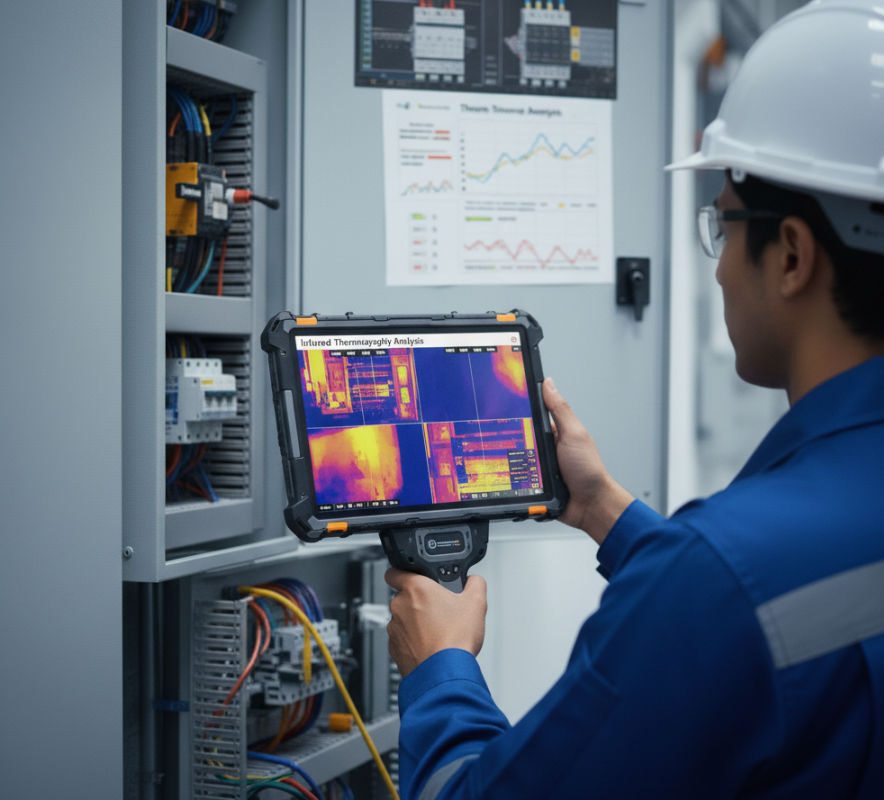
Motor evaluation using infrared thermography detects bearing problems, winding issues, phase imbalances, and cooling system failures in electric motors throughout Phoenix commercial and industrial facilities before catastrophic failure occurs. Phoenix Contracting Services provides comprehensive motor thermography for facilities with critical motors including HVAC systems, production equipment, pumps, compressors, conveyors, and process machinery—using thermal imaging to identify elevated temperatures indicating bearing wear, lubrication problems, overloading, phase imbalance, or cooling deficiencies that lead to motor failure if undetected.
Electric motors fail from multiple causes, most generating detectable heat signatures before failure. Bearing problems show as hot spots at bearing housings from inadequate lubrication, misalignment, or bearing wear. Winding problems create elevated motor frame temperatures from shorted turns, phase imbalance, or overloading. Cooling problems cause overall temperature elevation from blocked ventilation, failed cooling fans, or environmental contamination. Early thermal detection enables scheduled bearing replacement, alignment correction, or motor repair during planned maintenance windows instead of emergency shutdowns when motors fail during production.
When You Need Motor Thermography
-
- Your Phoenix facility has critical motors where unexpected failure causes production downtime, process interruptions, or costly emergency repairs
- Motors are experiencing shortened bearing life, unusual noise, vibration, or overheating suggesting developing problems requiring investigation
- Preventive maintenance programs require documented motor condition assessment to schedule bearing replacement and identify trending issues
- Production equipment motors are difficult to access during operation making visual inspection impractical but infrared allows non-contact assessment
- You’re experiencing repeat motor failures and need to identify whether problems originate from electrical supply, mechanical loading, or motor condition
- Energy efficiency initiatives require motor performance verification—overheating motors waste energy and indicate loading or efficiency problems
- Insurance or reliability programs require documented electrical equipment testing including motor thermal surveys per NFPA 70B standards
- HVAC, pump, or process equipment motors are aging and you need condition assessment to plan capital budgets for motor replacement
What Motor Evaluation Detects
Bearing Problems & Failures
Infrared thermography excels at detecting bearing issues before catastrophic failure, including bearing housings running hot from lubrication failure, indicating the need for greasing or bearing replacement, misalignment causing uneven bearing loading visible as temperature differences between inboard and outboard bearings, bearing wear from age or contamination showing progressive temperature increases over time, and overloading creating excessive bearing stress and heat. Bearing failures are the leading cause of motor breakdowns—thermal detection typically provides 30-90 days’ warning before failure, enabling planned replacement.
Winding Issues & Electrical Problems
Motor winding problems create elevated frame temperatures detectable by thermography, including shorted winding turns from insulation failure, causing localized hot spots, phase imbalance from electrical supply, creating uneven heating across the motor frame, overloading indicated by overall elevated temperature above nameplate rating, and cooling system problems preventing proper heat dissipation. Winding failures cause expensive motor rewinds or replacements—early detection through temperature monitoring enables voltage correction, load reduction, or scheduled motor service.
Phase Imbalance Effects
Three-phase systems require balanced loads for optimal operation, and infrared reveals imbalances, including one phase running significantly hotter than others, indicating uneven load distribution, neutral conductors showing excessive heat from improper load balancing, and bus bars displaying temperature variations across phases. Phase imbalance reduces equipment efficiency, shortens motor life, and indicates the need for load redistribution across panels and circuits.
Cooling System Problems
Motor cooling is critical for longevity, and infrared detects cooling deficiencies, including blocked ventilation passages or cooling fins showing elevated temperatures, failed cooling fans on force-cooled motors, environmental contamination restricting airflow around motors, and insufficient ventilation in motor installation locations. Cooling problems cause premature insulation failure and bearing damage—thermal detection identifies issues enabling cleaning, ventilation improvement, or cooling system repair.
Mechanical Loading Issues
Thermal patterns reveal mechanical problems affecting motors, including overloading from excessive mechanical load or improperly sized motors, binding or friction in driven equipment creating additional heating, belt tension problems in belt-driven applications, and coupling misalignment transferring loads to bearings. Mechanical problems cause motor overheating and premature failure—thermal identification enables mechanical corrections, protecting motor investment.
Trending & Predictive Maintenance
Regular thermal surveys enable motor condition trending, including baseline thermal profiles when motors are healthy, periodic measurements showing temperature changes over time, identification of gradually developing problems before failure, and predictive maintenance scheduling based on thermal condition. Thermal trending transforms reactive motor maintenance into a proactive condition-based program,s reducing downtime and extending motor life.
Call (602) 564-1144 or request a power quality analysis.
How Thermography Prevents Motor Failures
Motor failures cause multiple costs beyond motor replacement, including production downtime often costing thousands per hour, emergency service premiums for after-hours repairs, secondary damage to driven equipment from sudden motor failure, and rush shipping for replacement motors. Thermal monitoring provides advance warning, enabling planned repairs during scheduled maintenance, eliminating these multiplier costs.
A Phoenix manufacturing facility with 40+ production motors experienced 3-4 unexpected motor failures annually, costing $25,000-$40,000 each in downtime, emergency repairs, and lost production. We implemented quarterly motor thermography surveys, creating thermal baselines for all motors and trending conditions over time. During year one, thermography identified six motors with developing bearing problems (elevated temperatures trending upward), four motors with phase imbalance issues (uneven frame heating), and two motors with cooling blockages. All problems were corrected during scheduled maintenance windows. Motor failure rate dropped to zero over the following 18 months, with estimated savings of $150,000+ from avoided unplanned downtime.
When motor thermography identifies electrical supply problems, our three-phase monitoring services diagnose power quality issues, and our commercial electrical services correct phase imbalance and voltage problems affecting motor performance.
Core Services
Contact Us
Need to schedule a visit? Contact us
or
Call or text 24×7
(602) 564-1144
Frequently Asked Questions
Frequently Asked Questions
How does thermography detect motor problems?
Motor thermography identifies bearing problems from lubrication failure, misalignment, or bearing wear showing as hot spots at bearing housings, winding issues from shorted turns, phase imbalance, or overloading creating elevated motor frame temperatures, cooling problems from blocked vents or failed fans causing overall temperature elevation, terminal connection issues showing hot spots at motor connection boxes, overloading indicated by frame temperature above nameplate rating, and phase imbalance causing uneven heating across motor that infrared cameras detect months before catastrophic failure occurs.
Can infrared detect motor problems before failure?
Yes, thermal imaging typically provides 30-90 days’ warning before bearing failures, several weeks to months’ warning for winding problems, and immediate identification of cooling system issues. By monitoring during motor operation, we identify whether problems originate from electrical supply conditions or motor/mechanical issues requiring different corrective approaches, enabling planned repairs during scheduled maintenance rather than emergency responses to unexpected motor failures.
What motors should be included in thermography surveys?
Priority motors for thermal monitoring include critical production equipment where failure causes significant downtime, large horsepower motors (over 25-50 HP) where replacement costs are substantial, motors in difficult-to-access locations making frequent inspection impractical, motors operating continuously or at high duty cycles, aging motors approaching typical life expectancy, and motors with a history of problems or repeat failures. Most Phoenix facilities focus thermal surveys on 15-30 most critical motors initially, expanding coverage based on program success.
How much does motor thermography cost?
Motor thermography pricing depends on motor quantity and accessibility. Individual motor thermal inspection typically costs $75-$150 per motor, depending on size and location. Facility-wide motor surveys covering 20-50 motors typically range $2,000-$5,000. Motor thermography is often included as part of comprehensive facility infrared surveys. Regular quarterly or semi-annual surveys often receive volume discounting. Contact us at (602) 564-1144 for a custom quote.
Awesome clients review
Our Clients Feedback
Get a free quote
Ready to Move Forward?
Let’s put real data behind your decisions and fix what’s holding you back.
Or Call Us 24x7
602-564-1144